
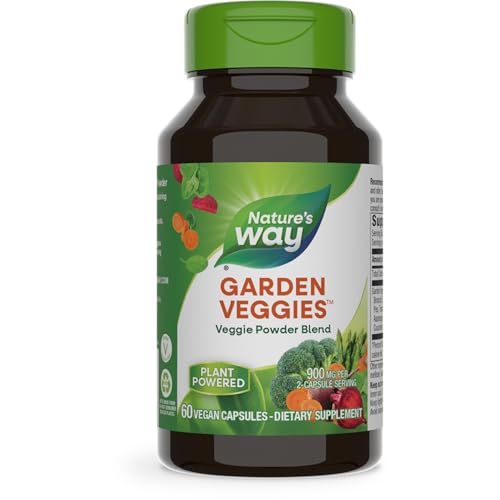


Nature's Way Garden Veggies Vegetable Supplement - 12 Veggies, Vegan, Gluten-Free - 60 Capsules


Cucurbita Pepo (Pumpkin)
Low RiskCucurbita pepo (pumpkin) is a gourd belonging to the Cucurbitaceae family, commonly cultivated for its edible fruit and seeds. It is often utilized in food products and cosmetics for its moisturizing properties and as a source of vitamins and antioxidants.
Sustai Insights
Cucurbita pepo exhibits functional benefits, serving as a moisturizer and a source of vitamins A and C, contributing to skin nourishment. It is sustainably sourced and biodegradable. Health risks are low, with minimal concerns regarding carcinogenicity, allergens, or toxicity. Environmental hazards are also low, with no significant pollutant potential. Regulatory bodies have not imposed restrictions on its use. Overall, the risk level associated with this ingredient is low, making it a safe choice in formulations.
Hydroxymethylcellulose
Low RiskHydroxymethylcellulose is a synthetic polymer derived from cellulose, primarily used as a thickening agent, emulsifier, and film-forming agent in various personal care and cosmetic products. It enhances texture, stability, and moisture retention, making it suitable for use in creams, lotions, and gels.
Sustai Insights
Hydroxymethylcellulose serves effectively as a thickener and stabilizer, contributing to product texture and moisture retention. It is considered low risk for health concerns such as carcinogenicity, allergies, and reproductive toxicity. Environmentally, it is not classified as a pollutant or bioaccumulative, aligning with regulatory standards in multiple regions. Overall, its risk level is assessed as low, with no significant adverse effects reported. Safe usage practices should be followed, and while alternatives exist, hydroxymethylcellulose remains a suitable choice in formulations.
Solanum Lycopersicum (Tomato)
Low RiskSolanum lycopersicum (tomato) extract is derived from the tomato fruit and is commonly used in cosmetic and personal care products for its antioxidant properties and skin-conditioning effects. It adds moisture and has a role in enhancing product texture.
Sustai Insights
Tomato extract provides functional benefits such as antioxidant protection and skin conditioning, contributing positively to product efficacy. It is considered low-risk regarding health concerns, including carcinogenicity and allergenic potential. Environmentally, it poses minimal risks and is not bioaccumulative. Regulatory bodies do not impose significant restrictions on its use, indicating a favorable risk profile overall. Safe usage practices are advised to maximize benefits while mitigating any potential risks. Alternatives include other plant extracts with similar benefits, enhancing sustainability and efficacy in formulations. Overall, the ingredient is assessed as low risk.
Spinacia Oleracea (Spinach)
Low RiskSpinacia oleracea (spinach) is a leafy green vegetable known for its nutrient density and is commonly used in various food products for its flavor and health benefits. It contains vitamins, minerals, and antioxidants, making it a popular ingredient in salads, smoothies, and dietary supplements.
Sustai Insights
Spinach offers functional benefits such as nutrient enrichment and antioxidant properties, contributing positively to health. It is sustainably sourced and biodegradable. Health risks are minimal, with low concerns regarding carcinogenicity, allergies, or reproductive toxicity. Environmental hazards are low, and it poses no regulatory warnings. Overall, it is assessed as a low-risk ingredient suitable for various uses.
Sand
Low RiskSand is loose, granular particles of worn or disintegrated rock, primarily composed of silica. It is commonly used as an abrasive, filler, or in construction and landscaping for its structural properties.
Sustai Insights
Sand offers functional benefits such as providing bulk and texture in various products, and it is generally considered to have low health risks, with minimal concerns regarding carcinogenicity, allergies, or reproductive toxicity. Environmentally, sand does not contribute significantly to pollution and is not bioaccumulative. Regulatory bodies do not impose restrictions on sand usage, maintaining its low-risk status. Safe usage practices should be followed to avoid inhalation of fine particles. Overall, sand is a low-risk ingredient with no notable negative impacts.
Cucumis Sativus (Cucumber)
Low RiskCucumis sativus (cucumber) fruit is a crushed derivative commonly used in cosmetic formulations for its hydrating and soothing properties. It is often included for its ability to provide a refreshing sensation and is utilized in a variety of skincare products.
Sustai Insights
Cucumis sativus is valued for its hydrating and soothing effects, making it a beneficial ingredient in skincare formulations. It poses low health risks, with minimal concerns regarding allergenic potential or toxicity. Environmental impacts are also low, as it is not known to be a pollutant or bioaccumulative. Regulatory assessments indicate no significant restrictions, supporting its safe use. Overall, the risk level associated with this ingredient is low. For those seeking alternatives, options such as aloe vera or chamomile may provide similar benefits with comparable safety profiles.
Daucus Carota Sativa (Carrot) Root
Low RiskDaucus carota sativa (carrot) root is a plant-derived ingredient commonly used in cosmetics and personal care products for its moisturizing and antioxidant properties. It is recognized for its potential benefits in skin health due to its nutrient-rich profile, including vitamins and minerals.
Sustai Insights
Daucus carota sativa exhibits functional benefits such as moisturization and antioxidant effects, which can enhance skin texture. It is biodegradable and often sustainably sourced. Health risks are considered low, with minimal concerns regarding carcinogenicity, allergy, or toxicity, as noted by the FDA. Environmental risks are also low, with no significant pollutant or bioaccumulation potential. Regulatory bodies have not issued restrictions, reinforcing its safe use. Overall, this ingredient is assessed as low risk, making it a favorable option in formulations.
Cucurbita Pepo (Pumpkin)
Low RiskCucurbita pepo (pumpkin) is a gourd belonging to the Cucurbitaceae family, commonly cultivated for its edible fruit and seeds. It is often utilized in food products and cosmetics for its moisturizing properties and as a source of vitamins and antioxidants.
Sustai Insights
Cucurbita pepo exhibits functional benefits, serving as a moisturizer and a source of vitamins A and C, contributing to skin nourishment. It is sustainably sourced and biodegradable. Health risks are low, with minimal concerns regarding carcinogenicity, allergens, or toxicity. Environmental hazards are also low, with no significant pollutant potential. Regulatory bodies have not imposed restrictions on its use. Overall, the risk level associated with this ingredient is low, making it a safe choice in formulations.
Hydroxymethylcellulose
Low RiskHydroxymethylcellulose is a synthetic polymer derived from cellulose, primarily used as a thickening agent, emulsifier, and film-forming agent in various personal care and cosmetic products. It enhances texture, stability, and moisture retention, making it suitable for use in creams, lotions, and gels.
Sustai Insights
Hydroxymethylcellulose serves effectively as a thickener and stabilizer, contributing to product texture and moisture retention. It is considered low risk for health concerns such as carcinogenicity, allergies, and reproductive toxicity. Environmentally, it is not classified as a pollutant or bioaccumulative, aligning with regulatory standards in multiple regions. Overall, its risk level is assessed as low, with no significant adverse effects reported. Safe usage practices should be followed, and while alternatives exist, hydroxymethylcellulose remains a suitable choice in formulations.
Solanum Lycopersicum (Tomato)
Low RiskSolanum lycopersicum (tomato) extract is derived from the tomato fruit and is commonly used in cosmetic and personal care products for its antioxidant properties and skin-conditioning effects. It adds moisture and has a role in enhancing product texture.
Sustai Insights
Tomato extract provides functional benefits such as antioxidant protection and skin conditioning, contributing positively to product efficacy. It is considered low-risk regarding health concerns, including carcinogenicity and allergenic potential. Environmentally, it poses minimal risks and is not bioaccumulative. Regulatory bodies do not impose significant restrictions on its use, indicating a favorable risk profile overall. Safe usage practices are advised to maximize benefits while mitigating any potential risks. Alternatives include other plant extracts with similar benefits, enhancing sustainability and efficacy in formulations. Overall, the ingredient is assessed as low risk.
Spinacia Oleracea (Spinach)
Low RiskSpinacia oleracea (spinach) is a leafy green vegetable known for its nutrient density and is commonly used in various food products for its flavor and health benefits. It contains vitamins, minerals, and antioxidants, making it a popular ingredient in salads, smoothies, and dietary supplements.
Sustai Insights
Spinach offers functional benefits such as nutrient enrichment and antioxidant properties, contributing positively to health. It is sustainably sourced and biodegradable. Health risks are minimal, with low concerns regarding carcinogenicity, allergies, or reproductive toxicity. Environmental hazards are low, and it poses no regulatory warnings. Overall, it is assessed as a low-risk ingredient suitable for various uses.
Sand
Low RiskSand is loose, granular particles of worn or disintegrated rock, primarily composed of silica. It is commonly used as an abrasive, filler, or in construction and landscaping for its structural properties.
Sustai Insights
Sand offers functional benefits such as providing bulk and texture in various products, and it is generally considered to have low health risks, with minimal concerns regarding carcinogenicity, allergies, or reproductive toxicity. Environmentally, sand does not contribute significantly to pollution and is not bioaccumulative. Regulatory bodies do not impose restrictions on sand usage, maintaining its low-risk status. Safe usage practices should be followed to avoid inhalation of fine particles. Overall, sand is a low-risk ingredient with no notable negative impacts.
Cucumis Sativus (Cucumber)
Low RiskCucumis sativus (cucumber) fruit is a crushed derivative commonly used in cosmetic formulations for its hydrating and soothing properties. It is often included for its ability to provide a refreshing sensation and is utilized in a variety of skincare products.
Sustai Insights
Cucumis sativus is valued for its hydrating and soothing effects, making it a beneficial ingredient in skincare formulations. It poses low health risks, with minimal concerns regarding allergenic potential or toxicity. Environmental impacts are also low, as it is not known to be a pollutant or bioaccumulative. Regulatory assessments indicate no significant restrictions, supporting its safe use. Overall, the risk level associated with this ingredient is low. For those seeking alternatives, options such as aloe vera or chamomile may provide similar benefits with comparable safety profiles.
Daucus Carota Sativa (Carrot) Root
Low RiskDaucus carota sativa (carrot) root is a plant-derived ingredient commonly used in cosmetics and personal care products for its moisturizing and antioxidant properties. It is recognized for its potential benefits in skin health due to its nutrient-rich profile, including vitamins and minerals.
Sustai Insights
Daucus carota sativa exhibits functional benefits such as moisturization and antioxidant effects, which can enhance skin texture. It is biodegradable and often sustainably sourced. Health risks are considered low, with minimal concerns regarding carcinogenicity, allergy, or toxicity, as noted by the FDA. Environmental risks are also low, with no significant pollutant or bioaccumulation potential. Regulatory bodies have not issued restrictions, reinforcing its safe use. Overall, this ingredient is assessed as low risk, making it a favorable option in formulations.
Discover Nature's Way Garden Veggies, a powerful vegetable supplement packed with a blend of 12 nutrient-rich veggies like broccoli, carrots, and spinach. Perfect for health-conscious individuals seeking to enhance their diet, this gluten-free and vegan formula provides a convenient way to boost your daily vegetable intake with just two capsules a day.
- Nutrient-Dense Blend: Each serving delivers the antioxidant equivalent of a serving of vegetables, supporting overall health and wellness.
- Clean Ingredients: Made with no artificial colors, flavors, or preservatives, ensuring a pure supplement experience.
- Easy to Incorporate: Simply take two capsules daily with food and water for optimal absorption, making it a hassle-free addition to your routine.
- Suitable for All: Ideal for adults and children aged 12 and up, providing essential nutrients for the whole family.
- Commitment to Quality: Nature’s Way has over 50 years of experience in crafting high-quality supplements, ensuring trust and reliability with every purchase.
Subscribe & Save with Sustai
- Best Price Guarantee: Always enjoy the lowest prices on sustainable home essentials.
- No Surprises: We’ll notify you before shipping. No hidden fees, ever.
- You’re in Charge: Change, pause, or cancel your subscription anytime with ease.
- Eco-Friendly Deliveries: Our grouped shipments mean less packaging and lower emissions.
Join us on a sustainable journey. Special offers for a limited time! Prices and promotions may change.
Recommended Products
Discover Nature's Way Garden Veggies, a powerful vegetable supplement packed with a blend of 12 nutrient-rich veggies like broccoli, carrots, and spinach. Perfect for health-conscious individuals seeking to enhance their diet, this gluten-free and vegan formula provides a convenient way to boost your daily vegetable intake with just two capsules a day.
- Nutrient-Dense Blend: Each serving delivers the antioxidant equivalent of a serving of vegetables, supporting overall health and wellness.
- Clean Ingredients: Made with no artificial colors, flavors, or preservatives, ensuring a pure supplement experience.
- Easy to Incorporate: Simply take two capsules daily with food and water for optimal absorption, making it a hassle-free addition to your routine.
- Suitable for All: Ideal for adults and children aged 12 and up, providing essential nutrients for the whole family.
- Commitment to Quality: Nature’s Way has over 50 years of experience in crafting high-quality supplements, ensuring trust and reliability with every purchase.
You can have at most 2 Sustainable Steals products in your cart
Customer Reviews

Customers’ View
Customers appreciate the energy boost and overall effectiveness of the Vegetable Supplement, with many noting it enhances their daily nutrient intake. The product is praised for its ease of consumption, as users find the capsules easy to swallow and free from aftertaste. Many reviews highlight the value for money, with customers feeling satisfied with the quality relative to the price. Additionally, the supplement is recognized for being gluten-free and vegan, making it suitable for a variety of dietary preferences. While some customers express mixed feelings about the taste, the overall sentiment reflects a strong alignment with health-conscious and environmentally aware values. Overall, users find this product a convenient addition to their wellness routine.
AI-generated from the text of customer reviewsThis product is rated 4.9 of 5.0 stars.
It has received 15 reviews.