

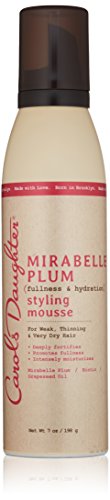
Carol's Daughter Hair Mousse - Adds Volume & Shine, Moisturizing Mirabelle Plum - 7 oz


Amp Acrylates/Allyl Methacrylate Copolymer
High RiskAMP-acrylates/allyl methacrylate copolymer is a film-forming agent commonly used in cosmetic formulations. It serves to enhance product texture and stability, contributing to the overall performance of various personal care products.
Sustai Insights
AMP-acrylates/allyl methacrylate copolymer offers functional benefits as a stabilizer and film former, improving product texture. However, it is subject to high use restrictions due to regulatory concerns. While it poses low risks for carcinogenicity, allergies, and reproductive toxicity, there are significant environmental considerations regarding its pollutant potential. The ingredient's overall risk is assessed as high, necessitating careful usage and consideration of safer alternatives.
Butane
High RiskButane is a hydrocarbon commonly used as a propellant in aerosol products and as a fuel source. It exists in gaseous form at room temperature and can be liquefied under pressure, making it effective for various applications in consumer products.

Sustai Insights
Butane serves as an effective propellant and fuel, contributing to product functionality. However, it poses health risks including moderate allergenic potential and low carcinogenic concerns. Environmental risks include high usage restrictions and potential for pollution. Regulatory bodies impose strict guidelines on its use. Overall, butane is assessed as high risk due to these factors, necessitating cautious usage practices and consideration of safer alternatives.
Fragrance
High RiskFragrance refers to a mixture of aromatic compounds used in products to provide scent. It is commonly listed as 'fragrance' or 'parfum' on product labels and can serve various functions, including enhancing user experience and masking undesirable odors.
Sustai Insights
Fragrance offers functional benefits by improving product appeal; however, it poses significant health risks, notably a high likelihood of causing allergies and allergic contact dermatitis. Environmental risks include potential pollution and endocrine disruption, though its overall carcinogenicity is low. Regulatory bodies have noted concerns regarding its use, leading to a high-risk classification. Safe usage practices should be observed, and alternatives such as natural essential oils are recommended for those sensitive to synthetic fragrances.
Aminomethyl Propanol
High RiskAminomethyl propanol is a small molecular weight buffering agent commonly used in cosmetic formulations to help maintain pH levels. It serves as an emulsifier and can enhance product stability and performance in various personal care products.
Sustai Insights
Aminomethyl propanol offers functional benefits as a buffering agent and enhances the stability of formulations. However, it is associated with skin and eye irritation and is subject to high use restrictions. Regulatory agencies have noted its potential risks, leading to an overall high-risk assessment. Safe usage practices should be followed, and alternatives such as milder pH adjusters may be considered.
Propylene Glycol
Medium RiskPropylene glycol is a small organic alcohol commonly used in cosmetics and personal care products as a humectant, solvent, and emulsifier. It helps retain moisture, enhances product texture, and aids in the delivery of active ingredients.
Sustai Insights
Propylene glycol serves vital functional benefits, including moisture retention and product stability. It is generally recognized as safe with low concerns for carcinogenicity and developmental toxicity. However, there may be moderate allergenic potential for some individuals. Environmentally, it poses minimal pollution risks and is not bioaccumulative. Regulatory bodies do not impose significant restrictions on its use. Overall, it presents a medium risk due to its allergenic potential and the need for cautious usage in sensitive populations.
Phenoxyethanol
Medium RiskPhenoxyethanol is a preservative used in cosmetics and personal care products to prevent microbial growth and extend shelf life. It is commonly found in formulations such as lotions, creams, and serums.
Sustai Insights
Phenoxyethanol serves effectively as a preservative, ensuring product stability and safety by inhibiting microbial growth. It is considered to have low health risks regarding carcinogenicity, allergies, and reproductive toxicity. However, moderate use restrictions exist, and regulatory bodies have advised caution in specific applications. Environmental concerns include its potential as a pollutant, although it is not highly bioaccumulative. Overall, the ingredient presents a medium risk level, with safe usage practices recommended and alternative preservatives available for those seeking greener options.
Propane
Medium RiskPropane is a hydrocarbon commonly used as a fuel for heating, cooking, and in industrial applications. It is a colorless gas at room temperature and is often found in pressurized liquid form in canisters or tanks.
Sustai Insights
Propane serves as an effective energy source with low emissions when combusted, making it a practical choice for heating and cooking. However, it poses potential health risks such as moderate allergenic effects and low risks of non-reproductive organ system toxicity. Environmentally, propane is not considered a significant pollutant, but it can contribute to greenhouse gas emissions. Regulatory bodies have not classified it as a carcinogen, but caution is advised regarding its use in confined spaces. Overall, propane is assessed as medium risk, and users should follow safe handling practices. Alternatives like natural gas may offer less environmental impact.
Vp/ Acrylates/ Lauryl Methacrylate Copolymer
Low RiskVP/acrylates/lauryl methacrylate copolymer is a synthetic polymer commonly used in cosmetic formulations as a film-forming agent and emulsifier. It enhances the texture and stability of products, providing a smooth application and improving performance in various formulations.
Sustai Insights
This ingredient offers functional benefits such as excellent film-forming properties and emulsification, contributing to product stability and user experience. It is considered low risk for health concerns, with minimal associations with carcinogenicity, allergies, or reproductive toxicity. Environmentally, it does not exhibit significant pollutant or bioaccumulation potential. Regulatory bodies have not issued major restrictions on its use. Overall, the ingredient is assessed as low risk, and no notable safer alternatives are highlighted.
Peg 40 Hydrogenated Castor Oil
Low RiskPEG-40 hydrogenated castor oil is a polyethylene glycol derivative of hydrogenated castor oil, commonly used as an emulsifier and surfactant in various cosmetic and personal care products. It helps to improve the texture and stability of formulations by facilitating the blending of oil and water-based ingredients.
Sustai Insights
PEG-40 hydrogenated castor oil offers functional benefits such as effective emulsification and stability enhancement in formulations. It is considered low risk for health concerns, including carcinogenicity and allergenic potential. Environmentally, it is not associated with significant hazards, and regulatory bodies have not imposed strict restrictions. Safe usage practices involve adhering to recommended concentrations. Overall, this ingredient presents a low risk profile with limited environmental impact, making it a suitable choice in cosmetic applications.
Ceteth 10
Low RiskCeteth-10 is a polyethylene glycol ether of cetyl alcohol, commonly used as an emulsifier and stabilizer in various cosmetic and personal care products. It helps improve the texture and consistency of formulations, enabling the mixing of water and oils effectively.
Sustai Insights
Ceteth-10 offers functional benefits as an emulsifier, enhancing product stability and texture. It is considered to have low health risks, with minimal concerns regarding carcinogenicity, allergies, or reproductive toxicity. Environmentally, it poses low pollution potential and is not known to bioaccumulate. Regulatory bodies have not imposed significant restrictions on its use. Overall, the ingredient is assessed to have low risk, making it a viable option in cosmetic formulations.
Polysorbate 21
Low RiskPolysorbate 21 is a mixture of laurate esters of sorbitol and its fatty acid esters, commonly used as an emulsifier and surfactant in cosmetic formulations. It helps to stabilize mixtures of oil and water, enhancing texture and consistency in products.
Sustai Insights
Polysorbate 21 serves effectively as an emulsifier, contributing to product stability and texture. It presents a low risk for health concerns such as carcinogenicity, allergies, and reproductive toxicity. Environmentally, it poses minimal hazards and is not known to bioaccumulate. Regulatory bodies, including the FDA, have not imposed significant restrictions on its use. Safe usage practices should be followed to minimize skin irritation. Overall, this ingredient is assessed as low risk with no notable adverse effects or significant environmental concerns.
Water
Low RiskWater is a clear, colorless liquid essential for various biological processes. It serves as a solvent in formulations, facilitating the dissolution of other ingredients and enhancing product texture and application. Additionally, water plays a crucial role in hydration and is a key component in many cosmetic and personal care products.
Sustai Insights
Water is an effective solvent and hydrator, contributing to the texture and efficacy of formulations. It is biodegradable and generally regarded as safe, with low concerns regarding carcinogenicity, allergies, and reproductive toxicity. However, excessive water usage can lead to environmental concerns, particularly regarding resource depletion. Regulatory bodies do not impose restrictions on water use in cosmetics. Overall, the risks associated with water are low, making it a safe and essential ingredient.
Propylene Glycol
Medium RiskPropylene glycol is a small organic alcohol commonly used in cosmetics and personal care products as a humectant, solvent, and emulsifier. It helps retain moisture, enhances product texture, and aids in the delivery of active ingredients.
Sustai Insights
Propylene glycol serves vital functional benefits, including moisture retention and product stability. It is generally recognized as safe with low concerns for carcinogenicity and developmental toxicity. However, there may be moderate allergenic potential for some individuals. Environmentally, it poses minimal pollution risks and is not bioaccumulative. Regulatory bodies do not impose significant restrictions on its use. Overall, it presents a medium risk due to its allergenic potential and the need for cautious usage in sensitive populations.
Amp Acrylates/Allyl Methacrylate Copolymer
High RiskAMP-acrylates/allyl methacrylate copolymer is a film-forming agent commonly used in cosmetic formulations. It serves to enhance product texture and stability, contributing to the overall performance of various personal care products.
Sustai Insights
AMP-acrylates/allyl methacrylate copolymer offers functional benefits as a stabilizer and film former, improving product texture. However, it is subject to high use restrictions due to regulatory concerns. While it poses low risks for carcinogenicity, allergies, and reproductive toxicity, there are significant environmental considerations regarding its pollutant potential. The ingredient's overall risk is assessed as high, necessitating careful usage and consideration of safer alternatives.
Vp/ Acrylates/ Lauryl Methacrylate Copolymer
Low RiskVP/acrylates/lauryl methacrylate copolymer is a synthetic polymer commonly used in cosmetic formulations as a film-forming agent and emulsifier. It enhances the texture and stability of products, providing a smooth application and improving performance in various formulations.
Sustai Insights
This ingredient offers functional benefits such as excellent film-forming properties and emulsification, contributing to product stability and user experience. It is considered low risk for health concerns, with minimal associations with carcinogenicity, allergies, or reproductive toxicity. Environmentally, it does not exhibit significant pollutant or bioaccumulation potential. Regulatory bodies have not issued major restrictions on its use. Overall, the ingredient is assessed as low risk, and no notable safer alternatives are highlighted.
Butane
High RiskButane is a hydrocarbon commonly used as a propellant in aerosol products and as a fuel source. It exists in gaseous form at room temperature and can be liquefied under pressure, making it effective for various applications in consumer products.
Sustai Insights
Butane serves as an effective propellant and fuel, contributing to product functionality. However, it poses health risks including moderate allergenic potential and low carcinogenic concerns. Environmental risks include high usage restrictions and potential for pollution. Regulatory bodies impose strict guidelines on its use. Overall, butane is assessed as high risk due to these factors, necessitating cautious usage practices and consideration of safer alternatives.
Peg 40 Hydrogenated Castor Oil
Low RiskPEG-40 hydrogenated castor oil is a polyethylene glycol derivative of hydrogenated castor oil, commonly used as an emulsifier and surfactant in various cosmetic and personal care products. It helps to improve the texture and stability of formulations by facilitating the blending of oil and water-based ingredients.
Sustai Insights
PEG-40 hydrogenated castor oil offers functional benefits such as effective emulsification and stability enhancement in formulations. It is considered low risk for health concerns, including carcinogenicity and allergenic potential. Environmentally, it is not associated with significant hazards, and regulatory bodies have not imposed strict restrictions. Safe usage practices involve adhering to recommended concentrations. Overall, this ingredient presents a low risk profile with limited environmental impact, making it a suitable choice in cosmetic applications.
Fragrance
High RiskFragrance refers to a mixture of aromatic compounds used in products to provide scent. It is commonly listed as 'fragrance' or 'parfum' on product labels and can serve various functions, including enhancing user experience and masking undesirable odors.
Sustai Insights
Fragrance offers functional benefits by improving product appeal; however, it poses significant health risks, notably a high likelihood of causing allergies and allergic contact dermatitis. Environmental risks include potential pollution and endocrine disruption, though its overall carcinogenicity is low. Regulatory bodies have noted concerns regarding its use, leading to a high-risk classification. Safe usage practices should be observed, and alternatives such as natural essential oils are recommended for those sensitive to synthetic fragrances.
Aminomethyl Propanol
High RiskAminomethyl propanol is a small molecular weight buffering agent commonly used in cosmetic formulations to help maintain pH levels. It serves as an emulsifier and can enhance product stability and performance in various personal care products.
Sustai Insights
Aminomethyl propanol offers functional benefits as a buffering agent and enhances the stability of formulations. However, it is associated with skin and eye irritation and is subject to high use restrictions. Regulatory agencies have noted its potential risks, leading to an overall high-risk assessment. Safe usage practices should be followed, and alternatives such as milder pH adjusters may be considered.
Ceteth 10
Low RiskCeteth-10 is a polyethylene glycol ether of cetyl alcohol, commonly used as an emulsifier and stabilizer in various cosmetic and personal care products. It helps improve the texture and consistency of formulations, enabling the mixing of water and oils effectively.
Sustai Insights
Ceteth-10 offers functional benefits as an emulsifier, enhancing product stability and texture. It is considered to have low health risks, with minimal concerns regarding carcinogenicity, allergies, or reproductive toxicity. Environmentally, it poses low pollution potential and is not known to bioaccumulate. Regulatory bodies have not imposed significant restrictions on its use. Overall, the ingredient is assessed to have low risk, making it a viable option in cosmetic formulations.
Phenoxyethanol
Medium RiskPhenoxyethanol is a preservative used in cosmetics and personal care products to prevent microbial growth and extend shelf life. It is commonly found in formulations such as lotions, creams, and serums.
Sustai Insights
Phenoxyethanol serves effectively as a preservative, ensuring product stability and safety by inhibiting microbial growth. It is considered to have low health risks regarding carcinogenicity, allergies, and reproductive toxicity. However, moderate use restrictions exist, and regulatory bodies have advised caution in specific applications. Environmental concerns include its potential as a pollutant, although it is not highly bioaccumulative. Overall, the ingredient presents a medium risk level, with safe usage practices recommended and alternative preservatives available for those seeking greener options.
Polysorbate 21
Low RiskPolysorbate 21 is a mixture of laurate esters of sorbitol and its fatty acid esters, commonly used as an emulsifier and surfactant in cosmetic formulations. It helps to stabilize mixtures of oil and water, enhancing texture and consistency in products.
Sustai Insights
Polysorbate 21 serves effectively as an emulsifier, contributing to product stability and texture. It presents a low risk for health concerns such as carcinogenicity, allergies, and reproductive toxicity. Environmentally, it poses minimal hazards and is not known to bioaccumulate. Regulatory bodies, including the FDA, have not imposed significant restrictions on its use. Safe usage practices should be followed to minimize skin irritation. Overall, this ingredient is assessed as low risk with no notable adverse effects or significant environmental concerns.
Water
Low RiskWater is a clear, colorless liquid essential for various biological processes. It serves as a solvent in formulations, facilitating the dissolution of other ingredients and enhancing product texture and application. Additionally, water plays a crucial role in hydration and is a key component in many cosmetic and personal care products.
Sustai Insights
Water is an effective solvent and hydrator, contributing to the texture and efficacy of formulations. It is biodegradable and generally regarded as safe, with low concerns regarding carcinogenicity, allergies, and reproductive toxicity. However, excessive water usage can lead to environmental concerns, particularly regarding resource depletion. Regulatory bodies do not impose restrictions on water use in cosmetics. Overall, the risks associated with water are low, making it a safe and essential ingredient.
Propane
Medium RiskPropane is a hydrocarbon commonly used as a fuel for heating, cooking, and in industrial applications. It is a colorless gas at room temperature and is often found in pressurized liquid form in canisters or tanks.
Sustai Insights
Propane serves as an effective energy source with low emissions when combusted, making it a practical choice for heating and cooking. However, it poses potential health risks such as moderate allergenic effects and low risks of non-reproductive organ system toxicity. Environmentally, propane is not considered a significant pollutant, but it can contribute to greenhouse gas emissions. Regulatory bodies have not classified it as a carcinogen, but caution is advised regarding its use in confined spaces. Overall, propane is assessed as medium risk, and users should follow safe handling practices. Alternatives like natural gas may offer less environmental impact.
Discover the transformative power of Carol's Daughter Mirabelle Plum Styling Mousse. This volumizing mousse not only elevates your style but also nourishes your curls with moisture-rich ingredients. Experience a lightweight, non-sticky formula that enhances shine and provides lasting hold, perfect for all curl types.
- Volumizing & Hydrating: Adds body and shine while providing lightweight hydration, ensuring fuller-looking hair without the sticky residue.
- Natural Ingredients: Infused with Biotin, Mirabelle Plums, and Aloe Leaf Juice, designed specifically for naturally curly hair from 1c waves to 4c coils.
- Sustainable Choice: Free from petroleum, parabens, and mineral oils, promoting healthier hair and environmentally conscious grooming.
- Versatile Styling: Ideal for various styles; use with a diffuser for curls or blow-dry for added volume.
- Heritage of Care: Crafted with love since 1993, Carol's Daughter empowers consumers with products made from quality ingredients and ethical practices.
Subscribe & Save with Sustai
- Best Price Guarantee: Always enjoy the lowest prices on sustainable home essentials.
- No Surprises: We’ll notify you before shipping. No hidden fees, ever.
- You’re in Charge: Change, pause, or cancel your subscription anytime with ease.
- Eco-Friendly Deliveries: Our grouped shipments mean less packaging and lower emissions.
Join us on a sustainable journey. Special offers for a limited time! Prices and promotions may change.
Recommended Products



Discover the transformative power of Carol's Daughter Mirabelle Plum Styling Mousse. This volumizing mousse not only elevates your style but also nourishes your curls with moisture-rich ingredients. Experience a lightweight, non-sticky formula that enhances shine and provides lasting hold, perfect for all curl types.
- Volumizing & Hydrating: Adds body and shine while providing lightweight hydration, ensuring fuller-looking hair without the sticky residue.
- Natural Ingredients: Infused with Biotin, Mirabelle Plums, and Aloe Leaf Juice, designed specifically for naturally curly hair from 1c waves to 4c coils.
- Sustainable Choice: Free from petroleum, parabens, and mineral oils, promoting healthier hair and environmentally conscious grooming.
- Versatile Styling: Ideal for various styles; use with a diffuser for curls or blow-dry for added volume.
- Heritage of Care: Crafted with love since 1993, Carol's Daughter empowers consumers with products made from quality ingredients and ethical practices.
You can have at most 2 Sustainable Steals products in your cart
Customer Reviews
Customers’ View
Customers generally appreciate the effective performance of Carol's Daughter Volumizing Mousse, particularly noting its ability to add volume and hold to fine and thin hair without creating a sticky residue. Many users have highlighted the lightweight formula that maintains body and shine throughout the day, with one reviewer mentioning it 'held shape all day' after just two uses. The product is recognized for its clean ingredient profile, being free from harmful additives such as petroleum and parabens, which resonates well with environmentally and health-conscious consumers. While there was a minor issue with product packaging reported by one customer, the overall sentiment leans towards satisfaction with its performance and formulation. Overall, customers find this mousse to be a reliable option for enhancing their natural hairstyles while aligning with their values of using clean and effective personal care products.
AI-generated from the text of customer reviewsThis product has no reviews yet.