
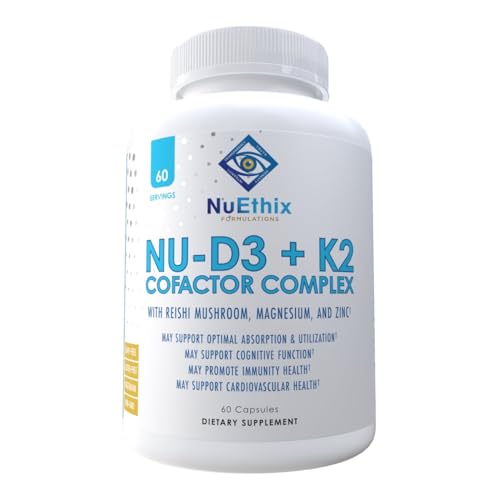

NuEthix Formulations NU-D3 + K2 - Supports Strong Bones & Energy, with Magnesium & Zinc - 60ct


Vitamin D3
High RiskVitamin D3, also known as cholecalciferol, is a fat-soluble vitamin important for calcium metabolism and bone health. It is synthesized in the skin upon exposure to sunlight and is also found in some foods and supplements. Its primary function is to promote the absorption of calcium and phosphorus in the body.
Sustai Insights
Vitamin D3 offers functional benefits such as supporting bone health and immune function. However, excessive intake can lead to toxicity, presenting risks like hypercalcemia. Environmental concerns include its potential for bioaccumulation. Regulatory bodies impose usage restrictions due to these risks, resulting in a high overall risk assessment. Safe usage practices should be observed, and alternatives such as vitamin D2 may be considered.
Selenium
High RiskSelenium is a trace mineral essential for various bodily functions, including antioxidant activity and thyroid hormone metabolism. It is commonly found in dietary sources such as seafood, meat, and nuts. Selenium plays a role in immune function and may protect against oxidative stress.
Sustai Insights
Selenium offers functional benefits such as antioxidant properties and support for thyroid health. However, it poses health risks, including potential developmental and reproductive toxicity, though concerns about carcinogenicity and allergenic potential are low. Environmental risks include its persistence and bioaccumulation in ecosystems. Regulatory agencies have placed significant use restrictions on selenium, categorizing it as high risk overall. Safe usage practices are essential, and alternatives like zinc or vitamin E may be considered for similar benefits.
Zinc
Medium RiskZinc is a trace mineral essential for various biological functions, including immune system support and cellular metabolism. It is commonly used in topical products for its antibacterial properties and is often included in formulations for skin health and wound healing.
Sustai Insights
Zinc offers functional benefits such as promoting skin health and providing antimicrobial effects, and it can be sustainably sourced. However, it poses moderate environmental risks due to potential bioaccumulation. Health risks are generally low, with concerns mainly related to developmental and reproductive toxicity at high exposures. Regulatory bodies have imposed some restrictions on its use, indicating a medium overall risk assessment. Safe usage practices should be followed, and alternatives like magnesium may offer similar benefits with lower risks.
Sodium
Low RiskSodium is a chemical element commonly used in various products, primarily as a preservative and stabilizing agent. It is involved in numerous reactions, contributing to the overall functionality and safety of formulations.
Sustai Insights
Sodium serves as an effective preservative, helping to extend product shelf life. It is generally recognized as safe with low concerns for carcinogenicity, allergies, and reproductive toxicity. However, excessive exposure may lead to health issues like hypertension. Environmentally, sodium is considered low risk regarding pollution and bioaccumulation. Regulatory bodies have not imposed significant restrictions on its use. Overall, the risk associated with sodium is low, making it a suitable ingredient with no major health or environmental concerns.
Magnesium
Low RiskMagnesium is a mineral commonly found in various products, serving primarily as a nutrient that supports multiple biological functions, including muscle and nerve function, and energy production. It is often included in dietary supplements and fortified foods to address magnesium deficiency.
Sustai Insights
Magnesium offers functional benefits such as aiding in muscle relaxation and energy production, making it an important nutrient. It is sustainably sourced and generally considered low risk, with minimal health concerns related to cancer, allergies, or reproductive toxicity. Environmental risks are also low, as it does not contribute significantly to pollution or bioaccumulation. Regulatory status is favorable, with no current restrictions. Safe usage practices involve adhering to recommended dietary allowances. Overall, magnesium is a low-risk ingredient with no significant adverse effects, making it a suitable choice in various applications.
Ascorbic Acid (Vitamin C)
Low RiskAscorbic acid (Vitamin C) is a naturally occurring antioxidant essential for various biological functions, including collagen synthesis and immune response. It is commonly used in cosmetic and food products for its preservative properties and ability to enhance skin brightness.
Sustai Insights
Ascorbic acid provides functional benefits as an effective antioxidant and preservative, contributing to skin health and product stability. It is generally recognized as safe with low health risks, including minimal concerns for carcinogenicity and allergies. Environmentally, it poses low risks, as it is biodegradable and does not bioaccumulate. Regulatory bodies like the FDA have not imposed significant restrictions on its use. Overall, the ingredient presents a low risk, with safe usage practices ensuring consumer safety, and alternatives such as natural extracts exist for those seeking different formulations.
Vitamin K
Low RiskVitamin K is a fat-soluble vitamin essential for various bodily functions, primarily known for its role in blood coagulation and bone metabolism. It exists in two main forms: K1 (phylloquinone) found in green leafy vegetables and K2 (menaquinone) found in fermented foods and animal products. It is commonly used in dietary supplements and food products.
Sustai Insights
Vitamin K has functional benefits, including promoting healthy blood clotting and supporting bone health. It is generally regarded as safe, with low concerns regarding carcinogenicity, allergies, or reproductive toxicity. Environmental risks are minimal, and it is not classified as a pollutant. Regulatory agencies do not impose significant restrictions on its use, resulting in an overall low-risk assessment. Safe usage practices include adhering to recommended dietary guidelines. Alternatives such as vitamin K-rich foods are readily available, supporting a sustainable approach to health.
Vitamin D3
High RiskVitamin D3, also known as cholecalciferol, is a fat-soluble vitamin important for calcium metabolism and bone health. It is synthesized in the skin upon exposure to sunlight and is also found in some foods and supplements. Its primary function is to promote the absorption of calcium and phosphorus in the body.
Sustai Insights
Vitamin D3 offers functional benefits such as supporting bone health and immune function. However, excessive intake can lead to toxicity, presenting risks like hypercalcemia. Environmental concerns include its potential for bioaccumulation. Regulatory bodies impose usage restrictions due to these risks, resulting in a high overall risk assessment. Safe usage practices should be observed, and alternatives such as vitamin D2 may be considered.
Sodium
Low RiskSodium is a chemical element commonly used in various products, primarily as a preservative and stabilizing agent. It is involved in numerous reactions, contributing to the overall functionality and safety of formulations.
Sustai Insights
Sodium serves as an effective preservative, helping to extend product shelf life. It is generally recognized as safe with low concerns for carcinogenicity, allergies, and reproductive toxicity. However, excessive exposure may lead to health issues like hypertension. Environmentally, sodium is considered low risk regarding pollution and bioaccumulation. Regulatory bodies have not imposed significant restrictions on its use. Overall, the risk associated with sodium is low, making it a suitable ingredient with no major health or environmental concerns.
Zinc
Medium RiskZinc is a trace mineral essential for various biological functions, including immune system support and cellular metabolism. It is commonly used in topical products for its antibacterial properties and is often included in formulations for skin health and wound healing.
Sustai Insights
Zinc offers functional benefits such as promoting skin health and providing antimicrobial effects, and it can be sustainably sourced. However, it poses moderate environmental risks due to potential bioaccumulation. Health risks are generally low, with concerns mainly related to developmental and reproductive toxicity at high exposures. Regulatory bodies have imposed some restrictions on its use, indicating a medium overall risk assessment. Safe usage practices should be followed, and alternatives like magnesium may offer similar benefits with lower risks.
Magnesium
Low RiskMagnesium is a mineral commonly found in various products, serving primarily as a nutrient that supports multiple biological functions, including muscle and nerve function, and energy production. It is often included in dietary supplements and fortified foods to address magnesium deficiency.
Sustai Insights
Magnesium offers functional benefits such as aiding in muscle relaxation and energy production, making it an important nutrient. It is sustainably sourced and generally considered low risk, with minimal health concerns related to cancer, allergies, or reproductive toxicity. Environmental risks are also low, as it does not contribute significantly to pollution or bioaccumulation. Regulatory status is favorable, with no current restrictions. Safe usage practices involve adhering to recommended dietary allowances. Overall, magnesium is a low-risk ingredient with no significant adverse effects, making it a suitable choice in various applications.
Ascorbic Acid (Vitamin C)
Low RiskAscorbic acid (Vitamin C) is a naturally occurring antioxidant essential for various biological functions, including collagen synthesis and immune response. It is commonly used in cosmetic and food products for its preservative properties and ability to enhance skin brightness.
Sustai Insights
Ascorbic acid provides functional benefits as an effective antioxidant and preservative, contributing to skin health and product stability. It is generally recognized as safe with low health risks, including minimal concerns for carcinogenicity and allergies. Environmentally, it poses low risks, as it is biodegradable and does not bioaccumulate. Regulatory bodies like the FDA have not imposed significant restrictions on its use. Overall, the ingredient presents a low risk, with safe usage practices ensuring consumer safety, and alternatives such as natural extracts exist for those seeking different formulations.
Selenium
High RiskSelenium is a trace mineral essential for various bodily functions, including antioxidant activity and thyroid hormone metabolism. It is commonly found in dietary sources such as seafood, meat, and nuts. Selenium plays a role in immune function and may protect against oxidative stress.
Sustai Insights
Selenium offers functional benefits such as antioxidant properties and support for thyroid health. However, it poses health risks, including potential developmental and reproductive toxicity, though concerns about carcinogenicity and allergenic potential are low. Environmental risks include its persistence and bioaccumulation in ecosystems. Regulatory agencies have placed significant use restrictions on selenium, categorizing it as high risk overall. Safe usage practices are essential, and alternatives like zinc or vitamin E may be considered for similar benefits.
Vitamin K
Low RiskVitamin K is a fat-soluble vitamin essential for various bodily functions, primarily known for its role in blood coagulation and bone metabolism. It exists in two main forms: K1 (phylloquinone) found in green leafy vegetables and K2 (menaquinone) found in fermented foods and animal products. It is commonly used in dietary supplements and food products.
Sustai Insights
Vitamin K has functional benefits, including promoting healthy blood clotting and supporting bone health. It is generally regarded as safe, with low concerns regarding carcinogenicity, allergies, or reproductive toxicity. Environmental risks are minimal, and it is not classified as a pollutant. Regulatory agencies do not impose significant restrictions on its use, resulting in an overall low-risk assessment. Safe usage practices include adhering to recommended dietary guidelines. Alternatives such as vitamin K-rich foods are readily available, supporting a sustainable approach to health.
Discover NuEthix Formulations NU-D3 + K2, a powerful Vitamin D3 and K2 supplement designed to enhance your health and well-being. This formula is packed with essential nutrients like Magnesium, Zinc, and Organic Reishi Mushroom to support strong bones and a happy mood.
- Strong Bones & Teeth: Promotes optimal calcium absorption for enhanced bone density and strength, contributing to overall skeletal health.
- Happy & Energetic: Boosts serotonin production, helping elevate mood and energy levels, especially during seasonal changes.
- Comprehensive Ingredients: Formulated with Magnesium and Zinc to maximize Vitamin D's effectiveness, plus Reishi Mushroom for immune support.
- Quality You Can Trust: Vegetarian, gluten-free, dairy-free, and non-GMO, with third-party testing ensuring purity and potency.
- Easy to Use: One capsule daily with a meal for best results; designed to fit seamlessly into your health routine.
Made in the USA in a cGMP-compliant facility, this supplement empowers consumers to prioritize their health sustainably.
Subscribe & Save with Sustai
- Best Price Guarantee: Always enjoy the lowest prices on sustainable home essentials.
- No Surprises: We’ll notify you before shipping. No hidden fees, ever.
- You’re in Charge: Change, pause, or cancel your subscription anytime with ease.
- Eco-Friendly Deliveries: Our grouped shipments mean less packaging and lower emissions.
Join us on a sustainable journey. Special offers for a limited time! Prices and promotions may change.
Recommended Products

Discover NuEthix Formulations NU-D3 + K2, a powerful Vitamin D3 and K2 supplement designed to enhance your health and well-being. This formula is packed with essential nutrients like Magnesium, Zinc, and Organic Reishi Mushroom to support strong bones and a happy mood.
- Strong Bones & Teeth: Promotes optimal calcium absorption for enhanced bone density and strength, contributing to overall skeletal health.
- Happy & Energetic: Boosts serotonin production, helping elevate mood and energy levels, especially during seasonal changes.
- Comprehensive Ingredients: Formulated with Magnesium and Zinc to maximize Vitamin D's effectiveness, plus Reishi Mushroom for immune support.
- Quality You Can Trust: Vegetarian, gluten-free, dairy-free, and non-GMO, with third-party testing ensuring purity and potency.
- Easy to Use: One capsule daily with a meal for best results; designed to fit seamlessly into your health routine.
Made in the USA in a cGMP-compliant facility, this supplement empowers consumers to prioritize their health sustainably.
You can have at most 2 Sustainable Steals products in your cart
Customer Reviews

Customers’ View
Customers express satisfaction with the Vitamin D3 and K2 supplement, highlighting its comprehensive formulation that includes beneficial ingredients like Magnesium, Zinc, and Reishi Mushroom. Many users appreciate the convenience of taking just one easy-to-swallow capsule daily, which aligns with health-conscious lifestyles. Reviews indicate that the supplement effectively supports bone health and immune function, with one user noting the importance of Vitamin K2 in directing calcium to the bones. The product's vegetarian-friendly and gluten-free attributes further resonate with eco-conscious consumers. Overall, customers value the balance of essential nutrients and the product's quality assurance, contributing to a positive experience.
AI-generated from the text of customer reviewsThis product is rated 4.5 of 5.0 stars.
It has received 17 reviews.