
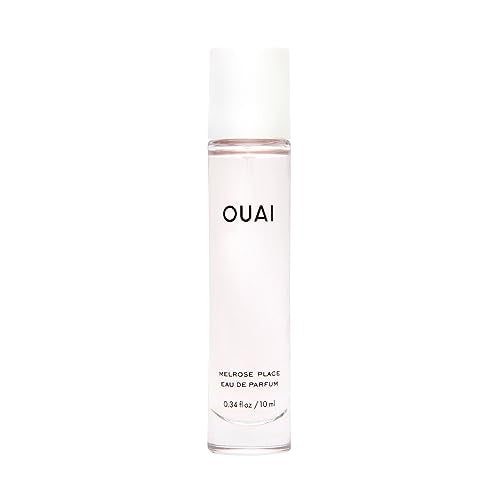
OUAI Melrose Place Eau de Parfum - Fresh Floral Notes of Champagne & Rose - Travel Size 0.34 Oz


Citronellol
High RiskCitronellol is a naturally occurring scent ingredient commonly found in various essential oils. It is primarily used for its aromatic properties in perfumes, cosmetics, and household products, contributing to fragrance profiles.

Sustai Insights
Citronellol serves as a fragrance component, enhancing product appeal. However, it has a high allergenic potential, posing risks of skin irritation and sensitization. Environmental concerns include contamination risks. Regulatory bodies have restrictions on its use, emphasizing caution. Overall, citronellol presents a high risk regarding health and safety, warranting careful consideration in product formulations.
Octinoxate
High RiskOctinoxate is a widely used sunscreen ingredient known for its ability to absorb UV radiation, providing protection against sunburn and skin damage. It is often incorporated into lotions and creams to enhance their effectiveness in shielding the skin from harmful UV rays.
Sustai Insights
Octinoxate effectively serves as a UV filter in sunscreen formulations, contributing to skin protection. However, it raises health concerns, including potential endocrine disruption and low to moderate risks of allergies and neurotoxicity. Environmentally, it has been flagged for its pollutant potential and possible bioaccumulation. Regulatory bodies have issued warnings regarding its use, classifying the overall risk as high. Safe usage practices are advised, and alternatives such as mineral-based sunscreens may offer safer options.
Bht
High RiskButylated hydroxytoluene (BHT) is a toluene-based synthetic antioxidant commonly used in cosmetics and food products to prevent oxidation and extend shelf life. It functions by inhibiting the free radical chain reaction that leads to the degradation of fats and oils, thereby maintaining product stability.
Sustai Insights
BHT serves as an effective antioxidant, helping to preserve product integrity. However, it has been associated with high allergenic potential and raised concerns regarding developmental neurobehavioral toxicity. Environmental risks include its classification as a pollutant with potential bioaccumulation. Regulatory agencies have noted various restrictions on its use. Overall, the ingredient carries a high risk due to these factors and should be used with caution, considering safer alternatives when possible.
Geraniol
High RiskGeraniol is a naturally occurring scent ingredient commonly found in essential oils from plants such as geraniums and lemongrass. It is primarily used for its pleasant floral aroma in perfumes, cosmetics, and household products.
Sustai Insights
Geraniol serves as a fragrance component and offers a natural option for scenting products. However, it has a high allergenic potential and may cause skin irritation in sensitive individuals. While it is considered low risk for carcinogenicity and reproductive toxicity, regulatory bodies have placed restrictions on its use due to allergenic concerns. Overall, the assessment reflects a high-risk level, particularly for those prone to allergies, highlighting the need for caution in its application.
Benzyl Salicylate
High RiskBenzyl salicylate is an ester of benzyl alcohol and salicylic acid, commonly used in personal care products as a fragrance component and UV filter. It is known for its ability to enhance product stability and provide a pleasant scent.
Sustai Insights
Benzyl salicylate offers functional benefits such as UV protection and fragrance enhancement. However, it is associated with a high allergenic potential and is categorized as a skin irritant, posing significant health risks. Environmental risks include its potential to act as a pollutant. Regulatory authorities have imposed restrictions on its use due to these concerns. Overall, it is assessed as high risk, necessitating caution in usage and consideration of safer alternatives.
Linalool
High RiskLinalool is a terpene commonly found in various plants, particularly in lavender and mint. It is primarily used in products for its fragrance and potential antimicrobial properties. Linalool is also utilized in formulations for its ability to enhance the sensory experience of personal care and household products.
Sustai Insights
Linalool offers functional benefits as a naturally occurring fragrance component and may exhibit antimicrobial properties. However, it presents high allergenic potential, with concerns about skin irritation and sensitization. Environmental risks include contamination issues, though it is not classified as a persistent pollutant. Regulatory bodies have noted the need for careful handling due to its allergenic nature. Overall, despite some beneficial attributes, the ingredient carries a high risk profile, warranting cautious use and consideration of safer alternatives.
Fragrance
High RiskFragrance refers to a mixture of aromatic compounds used in products to provide scent. It is commonly listed as 'fragrance' or 'parfum' on product labels and can serve various functions, including enhancing user experience and masking undesirable odors.
Sustai Insights
Fragrance offers functional benefits by improving product appeal; however, it poses significant health risks, notably a high likelihood of causing allergies and allergic contact dermatitis. Environmental risks include potential pollution and endocrine disruption, though its overall carcinogenicity is low. Regulatory bodies have noted concerns regarding its use, leading to a high-risk classification. Safe usage practices should be observed, and alternatives such as natural essential oils are recommended for those sensitive to synthetic fragrances.
Octisalate
Medium RiskOctisalate is a weak UVB absorber commonly used in sunscreen formulations to enhance sun protection. It functions by absorbing ultraviolet radiation, thereby preventing sunburn and skin damage. This ingredient is often combined with other UV filters to achieve a broad-spectrum protective effect.
Sustai Insights
Octisalate provides effective UVB protection in sun care products, contributing to skin safety by reducing sunburn risk. Its environmental impact is moderate, with some concerns about its potential as an endocrine disruptor and possible restrictions in specific regions. Health risks are generally low, with low to moderate concerns regarding allergies and immunotoxicity. Regulatory bodies have verified its safe use under certain conditions, leading to an overall moderate risk assessment. For safer alternatives, consider mineral-based UV filters or other approved organic compounds.
Avobenzone
Medium RiskAvobenzone is an organic compound commonly used in sunscreens and skincare products for its ability to absorb ultraviolet (UV) radiation. It provides broad-spectrum protection against UVA rays, helping to prevent skin damage caused by sun exposure. However, it is known to degrade when exposed to sunlight unless stabilized with other ingredients.
Sustai Insights
Avobenzone effectively protects against UVA rays, making it a valuable ingredient in sun care products. However, it has moderate use restrictions due to its instability in sunlight, which can lead to enhanced skin absorption and potential irritation. Regulatory bodies restrict its use in certain formulations, categorizing it as having low concerns for cancer, allergies, and reproductive toxicity. Environmental risks include its potential as a pollutant, though it is not highly bioaccumulative. Overall, the ingredient poses medium risk, and users should adhere to product recommendations for safe application.
Alcohol Denatured
Low RiskAlcohol denatured, also known as specially denatured (SD) alcohol, is a mixture of ethanol and other substances that render it unsuitable for consumption. It is commonly used in cosmetic and personal care products as a solvent, preservative, and penetration enhancer, facilitating the absorption of other ingredients.
Sustai Insights
Alcohol denatured offers functional benefits as a solvent and preservative, aiding in the formulation of various products. It is not associated with significant health risks, with low concerns regarding carcinogenicity, allergies, and reproductive toxicity. Environmental risks are minimal, and it is not classified as a pollutant. Regulatory bodies do not impose major restrictions on its use, indicating a low overall risk level. Safe usage practices should be followed to minimize exposure, and alternative solvents can be considered for those seeking greener options.
Water
Low RiskWater is a clear, colorless liquid essential for various biological processes. It serves as a solvent in formulations, facilitating the dissolution of other ingredients and enhancing product texture and application. Additionally, water plays a crucial role in hydration and is a key component in many cosmetic and personal care products.
Sustai Insights
Water is an effective solvent and hydrator, contributing to the texture and efficacy of formulations. It is biodegradable and generally regarded as safe, with low concerns regarding carcinogenicity, allergies, and reproductive toxicity. However, excessive water usage can lead to environmental concerns, particularly regarding resource depletion. Regulatory bodies do not impose restrictions on water use in cosmetics. Overall, the risks associated with water are low, making it a safe and essential ingredient.
Citronellol
High RiskCitronellol is a naturally occurring scent ingredient commonly found in various essential oils. It is primarily used for its aromatic properties in perfumes, cosmetics, and household products, contributing to fragrance profiles.
Sustai Insights
Citronellol serves as a fragrance component, enhancing product appeal. However, it has a high allergenic potential, posing risks of skin irritation and sensitization. Environmental concerns include contamination risks. Regulatory bodies have restrictions on its use, emphasizing caution. Overall, citronellol presents a high risk regarding health and safety, warranting careful consideration in product formulations.
Octinoxate
High RiskOctinoxate is a widely used sunscreen ingredient known for its ability to absorb UV radiation, providing protection against sunburn and skin damage. It is often incorporated into lotions and creams to enhance their effectiveness in shielding the skin from harmful UV rays.
Sustai Insights
Octinoxate effectively serves as a UV filter in sunscreen formulations, contributing to skin protection. However, it raises health concerns, including potential endocrine disruption and low to moderate risks of allergies and neurotoxicity. Environmentally, it has been flagged for its pollutant potential and possible bioaccumulation. Regulatory bodies have issued warnings regarding its use, classifying the overall risk as high. Safe usage practices are advised, and alternatives such as mineral-based sunscreens may offer safer options.
Bht
High RiskButylated hydroxytoluene (BHT) is a toluene-based synthetic antioxidant commonly used in cosmetics and food products to prevent oxidation and extend shelf life. It functions by inhibiting the free radical chain reaction that leads to the degradation of fats and oils, thereby maintaining product stability.
Sustai Insights
BHT serves as an effective antioxidant, helping to preserve product integrity. However, it has been associated with high allergenic potential and raised concerns regarding developmental neurobehavioral toxicity. Environmental risks include its classification as a pollutant with potential bioaccumulation. Regulatory agencies have noted various restrictions on its use. Overall, the ingredient carries a high risk due to these factors and should be used with caution, considering safer alternatives when possible.
Geraniol
High RiskGeraniol is a naturally occurring scent ingredient commonly found in essential oils from plants such as geraniums and lemongrass. It is primarily used for its pleasant floral aroma in perfumes, cosmetics, and household products.
Sustai Insights
Geraniol serves as a fragrance component and offers a natural option for scenting products. However, it has a high allergenic potential and may cause skin irritation in sensitive individuals. While it is considered low risk for carcinogenicity and reproductive toxicity, regulatory bodies have placed restrictions on its use due to allergenic concerns. Overall, the assessment reflects a high-risk level, particularly for those prone to allergies, highlighting the need for caution in its application.
Octisalate
Medium RiskOctisalate is a weak UVB absorber commonly used in sunscreen formulations to enhance sun protection. It functions by absorbing ultraviolet radiation, thereby preventing sunburn and skin damage. This ingredient is often combined with other UV filters to achieve a broad-spectrum protective effect.
Sustai Insights
Octisalate provides effective UVB protection in sun care products, contributing to skin safety by reducing sunburn risk. Its environmental impact is moderate, with some concerns about its potential as an endocrine disruptor and possible restrictions in specific regions. Health risks are generally low, with low to moderate concerns regarding allergies and immunotoxicity. Regulatory bodies have verified its safe use under certain conditions, leading to an overall moderate risk assessment. For safer alternatives, consider mineral-based UV filters or other approved organic compounds.
Avobenzone
Medium RiskAvobenzone is an organic compound commonly used in sunscreens and skincare products for its ability to absorb ultraviolet (UV) radiation. It provides broad-spectrum protection against UVA rays, helping to prevent skin damage caused by sun exposure. However, it is known to degrade when exposed to sunlight unless stabilized with other ingredients.
Sustai Insights
Avobenzone effectively protects against UVA rays, making it a valuable ingredient in sun care products. However, it has moderate use restrictions due to its instability in sunlight, which can lead to enhanced skin absorption and potential irritation. Regulatory bodies restrict its use in certain formulations, categorizing it as having low concerns for cancer, allergies, and reproductive toxicity. Environmental risks include its potential as a pollutant, though it is not highly bioaccumulative. Overall, the ingredient poses medium risk, and users should adhere to product recommendations for safe application.
Alcohol Denatured
Low RiskAlcohol denatured, also known as specially denatured (SD) alcohol, is a mixture of ethanol and other substances that render it unsuitable for consumption. It is commonly used in cosmetic and personal care products as a solvent, preservative, and penetration enhancer, facilitating the absorption of other ingredients.
Sustai Insights
Alcohol denatured offers functional benefits as a solvent and preservative, aiding in the formulation of various products. It is not associated with significant health risks, with low concerns regarding carcinogenicity, allergies, and reproductive toxicity. Environmental risks are minimal, and it is not classified as a pollutant. Regulatory bodies do not impose major restrictions on its use, indicating a low overall risk level. Safe usage practices should be followed to minimize exposure, and alternative solvents can be considered for those seeking greener options.
Benzyl Salicylate
High RiskBenzyl salicylate is an ester of benzyl alcohol and salicylic acid, commonly used in personal care products as a fragrance component and UV filter. It is known for its ability to enhance product stability and provide a pleasant scent.
Sustai Insights
Benzyl salicylate offers functional benefits such as UV protection and fragrance enhancement. However, it is associated with a high allergenic potential and is categorized as a skin irritant, posing significant health risks. Environmental risks include its potential to act as a pollutant. Regulatory authorities have imposed restrictions on its use due to these concerns. Overall, it is assessed as high risk, necessitating caution in usage and consideration of safer alternatives.
Water
Low RiskWater is a clear, colorless liquid essential for various biological processes. It serves as a solvent in formulations, facilitating the dissolution of other ingredients and enhancing product texture and application. Additionally, water plays a crucial role in hydration and is a key component in many cosmetic and personal care products.
Sustai Insights
Water is an effective solvent and hydrator, contributing to the texture and efficacy of formulations. It is biodegradable and generally regarded as safe, with low concerns regarding carcinogenicity, allergies, and reproductive toxicity. However, excessive water usage can lead to environmental concerns, particularly regarding resource depletion. Regulatory bodies do not impose restrictions on water use in cosmetics. Overall, the risks associated with water are low, making it a safe and essential ingredient.
Linalool
High RiskLinalool is a terpene commonly found in various plants, particularly in lavender and mint. It is primarily used in products for its fragrance and potential antimicrobial properties. Linalool is also utilized in formulations for its ability to enhance the sensory experience of personal care and household products.
Sustai Insights
Linalool offers functional benefits as a naturally occurring fragrance component and may exhibit antimicrobial properties. However, it presents high allergenic potential, with concerns about skin irritation and sensitization. Environmental risks include contamination issues, though it is not classified as a persistent pollutant. Regulatory bodies have noted the need for careful handling due to its allergenic nature. Overall, despite some beneficial attributes, the ingredient carries a high risk profile, warranting cautious use and consideration of safer alternatives.
Fragrance
High RiskFragrance refers to a mixture of aromatic compounds used in products to provide scent. It is commonly listed as 'fragrance' or 'parfum' on product labels and can serve various functions, including enhancing user experience and masking undesirable odors.
Sustai Insights
Fragrance offers functional benefits by improving product appeal; however, it poses significant health risks, notably a high likelihood of causing allergies and allergic contact dermatitis. Environmental risks include potential pollution and endocrine disruption, though its overall carcinogenicity is low. Regulatory bodies have noted concerns regarding its use, leading to a high-risk classification. Safe usage practices should be observed, and alternatives such as natural essential oils are recommended for those sensitive to synthetic fragrances.
Experience the captivating essence of OUAI Melrose Place Eau de Parfum, a fresh floral fragrance designed for the modern woman. This travel-sized perfume combines notes of champagne, bergamot, and rose, making it perfect for any occasion, from the office to a night out.
- Versatile Fragrance: Transition effortlessly from day to night with a refreshing scent that complements any outfit.
- Long-Lasting Formula: Designed for all-day wear, the unique blend ensures a captivating aroma that lingers beautifully.
- Travel-Friendly Size: Compact and convenient, perfect for on-the-go touch-ups without compromising quality.
- Layer for Impact: Enhance your fragrance experience by applying to pulse points for a more intense scent.
- Cruelty-Free Commitment: OUAI stands by ethical practices, ensuring their products are not tested on animals, reflecting a commitment to sustainability and community values.
Subscribe & Save with Sustai
- Best Price Guarantee: Always enjoy the lowest prices on sustainable home essentials.
- No Surprises: We’ll notify you before shipping. No hidden fees, ever.
- You’re in Charge: Change, pause, or cancel your subscription anytime with ease.
- Eco-Friendly Deliveries: Our grouped shipments mean less packaging and lower emissions.
Join us on a sustainable journey. Special offers for a limited time! Prices and promotions may change.
Recommended Products

Experience the captivating essence of OUAI Melrose Place Eau de Parfum, a fresh floral fragrance designed for the modern woman. This travel-sized perfume combines notes of champagne, bergamot, and rose, making it perfect for any occasion, from the office to a night out.
- Versatile Fragrance: Transition effortlessly from day to night with a refreshing scent that complements any outfit.
- Long-Lasting Formula: Designed for all-day wear, the unique blend ensures a captivating aroma that lingers beautifully.
- Travel-Friendly Size: Compact and convenient, perfect for on-the-go touch-ups without compromising quality.
- Layer for Impact: Enhance your fragrance experience by applying to pulse points for a more intense scent.
- Cruelty-Free Commitment: OUAI stands by ethical practices, ensuring their products are not tested on animals, reflecting a commitment to sustainability and community values.
You can have at most 2 Sustainable Steals products in your cart
Customer Reviews

Customers’ View
Customers express a generally positive sentiment towards the OUAI Melrose Place Eau de Parfum, appreciating its fresh floral scent that features sweet and citrus notes. Many describe the fragrance as clean and intoxicating, with one customer noting, 'It’s a light clean - slightly green scent I’ve been dreaming of!' While the versatility of the perfume allows for both daytime and evening wear, opinions vary on its longevity, with some users stating it lasts only a short while. Additionally, the travel-friendly size is highlighted as a practical benefit, fitting easily into purses or gym bags. Although some customers feel the price could reflect better lasting power, many still find it affordable for a premium brand. Overall, this fragrance resonates well with consumers seeking a subtle yet appealing scent that aligns with their health-conscious and eco-friendly values.
AI-generated from the text of customer reviewsThis product is rated 4.6 of 5.0 stars.
It has received 5 reviews.