

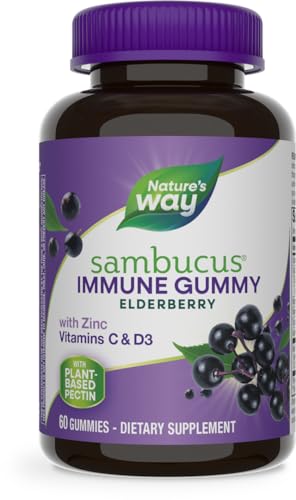


Nature's Way Sambucus Elderberry Gummies - Immune Support with Vitamin C, D3, Zinc - 60 Count


Vitamin D3
High RiskVitamin D3, also known as cholecalciferol, is a fat-soluble vitamin important for calcium metabolism and bone health. It is synthesized in the skin upon exposure to sunlight and is also found in some foods and supplements. Its primary function is to promote the absorption of calcium and phosphorus in the body.
Sustai Insights
Vitamin D3 offers functional benefits such as supporting bone health and immune function. However, excessive intake can lead to toxicity, presenting risks like hypercalcemia. Environmental concerns include its potential for bioaccumulation. Regulatory bodies impose usage restrictions due to these risks, resulting in a high overall risk assessment. Safe usage practices should be observed, and alternatives such as vitamin D2 may be considered.
Zinc
Medium RiskZinc is a trace mineral essential for various biological functions, including immune system support and cellular metabolism. It is commonly used in topical products for its antibacterial properties and is often included in formulations for skin health and wound healing.
Sustai Insights
Zinc offers functional benefits such as promoting skin health and providing antimicrobial effects, and it can be sustainably sourced. However, it poses moderate environmental risks due to potential bioaccumulation. Health risks are generally low, with concerns mainly related to developmental and reproductive toxicity at high exposures. Regulatory bodies have imposed some restrictions on its use, indicating a medium overall risk assessment. Safe usage practices should be followed, and alternatives like magnesium may offer similar benefits with lower risks.
Citric Acid
Medium RiskCitric acid is an alpha hydroxy acid used in personal care products primarily for its role as a pH adjuster and natural preservative. It occurs naturally in citrus fruits and is commonly utilized in various formulations for its chelating properties and mild exfoliation benefits.
Sustai Insights
Citric acid offers functional benefits as an effective preservative and pH stabilizer, contributing to product longevity and stability. It is biodegradable and derived from renewable sources. Health risks are low, with minimal concerns regarding carcinogenicity, allergies, and reproductive toxicity. However, moderate use restrictions exist due to potential irritation at high concentrations. Environmental risks are limited, as citric acid is not known to accumulate in ecosystems. Regulatory agencies have no significant advisories against its use. Overall, it is assessed as a medium-risk ingredient, with safe usage practices recommended and alternatives available.
Beeswax, Yellow
Low RiskBeeswax, yellow, is a natural wax produced by honeybees, primarily composed of esters of fatty acids and long-chain alcohols. It serves as an emulsifier, thickener, and stabilizer in cosmetic formulations, contributing to texture and consistency. It is commonly used in creams, balms, and lip products.
Sustai Insights
Beeswax provides functional benefits such as enhancing product texture and acting as a natural emulsifier, while also being biodegradable and sustainably sourced. Health risks are minimal, with low concerns for carcinogenicity, allergies, or irritations. Environmental impacts are also low, as it does not bioaccumulate. Regulatory status remains favorable with no current restrictions. Overall, the ingredient poses low risk, making it a suitable choice in cosmetic formulations.
Sodium Citrate
Low RiskSodium citrate is used in cosmetic formulations primarily as a buffering agent, helping to stabilize pH levels. It is derived from citric acid and is commonly found in various personal care products to enhance their efficacy and stability.
Sustai Insights
Sodium citrate offers functional benefits such as effective pH regulation and acts as a mild preservative. It is generally recognized as safe with low risks for cancer, allergies, and reproductive toxicity. Environmental concerns are minimal, with no significant pollutant potential or bioaccumulation. Regulatory bodies like the FDA and COSMOS have no major restrictions on its use. Overall, sodium citrate presents a low risk, making it a viable ingredient in cosmetic formulations. Safe usage practices should be followed, and alternatives are not typically necessary.
Apple Pectin
Low RiskApple pectin is a natural polysaccharide found in the cell walls of apples. It is commonly used as a gelling agent, thickener, and stabilizer in food products, as well as in cosmetics and pharmaceuticals. Its gelling properties are utilized to improve texture and consistency.
Sustai Insights
Apple pectin serves as an effective thickener and stabilizer, contributing to the texture of various products. It is biodegradable and derived from renewable sources, enhancing its sustainability profile. Health risks are minimal, with low concerns for carcinogenicity, allergies, or reproductive toxicity. Environmental impact is also low, with no known pollutants or bioaccumulation issues. Regulatory status is clear, with no current restrictions. Overall, the risk level associated with apple pectin is low, making it a safe ingredient for use in formulations.
Cocos Nucifera (Coconut) Oil
Low RiskCocos Nucifera (Coconut) Oil is derived from the kernels of the coconut palm. It is primarily used in cosmetic formulations for its emollient and moisturizing properties, making it suitable for skin and hair care products.
Sustai Insights
Coconut oil serves as an effective moisturizer and emollient, promoting skin hydration and softness. It is sustainably sourced and biodegradable. Health risks are minimal, with low concerns regarding carcinogenicity, allergens, and reproductive toxicity. Environmental impact is also low, as it does not contribute significantly to pollution or bioaccumulation. Regulatory bodies have not issued restrictions on its use. Overall, coconut oil presents a low risk for health and environmental concerns, making it a safe ingredient in cosmetic products.
Ascorbic Acid (Vitamin C)
Low RiskAscorbic acid (Vitamin C) is a naturally occurring antioxidant essential for various biological functions, including collagen synthesis and immune response. It is commonly used in cosmetic and food products for its preservative properties and ability to enhance skin brightness.
Sustai Insights
Ascorbic acid provides functional benefits as an effective antioxidant and preservative, contributing to skin health and product stability. It is generally recognized as safe with low health risks, including minimal concerns for carcinogenicity and allergies. Environmentally, it poses low risks, as it is biodegradable and does not bioaccumulate. Regulatory bodies like the FDA have not imposed significant restrictions on its use. Overall, the ingredient presents a low risk, with safe usage practices ensuring consumer safety, and alternatives such as natural extracts exist for those seeking different formulations.
Vitamin D3
High RiskVitamin D3, also known as cholecalciferol, is a fat-soluble vitamin important for calcium metabolism and bone health. It is synthesized in the skin upon exposure to sunlight and is also found in some foods and supplements. Its primary function is to promote the absorption of calcium and phosphorus in the body.
Sustai Insights
Vitamin D3 offers functional benefits such as supporting bone health and immune function. However, excessive intake can lead to toxicity, presenting risks like hypercalcemia. Environmental concerns include its potential for bioaccumulation. Regulatory bodies impose usage restrictions due to these risks, resulting in a high overall risk assessment. Safe usage practices should be observed, and alternatives such as vitamin D2 may be considered.
Zinc
Medium RiskZinc is a trace mineral essential for various biological functions, including immune system support and cellular metabolism. It is commonly used in topical products for its antibacterial properties and is often included in formulations for skin health and wound healing.
Sustai Insights
Zinc offers functional benefits such as promoting skin health and providing antimicrobial effects, and it can be sustainably sourced. However, it poses moderate environmental risks due to potential bioaccumulation. Health risks are generally low, with concerns mainly related to developmental and reproductive toxicity at high exposures. Regulatory bodies have imposed some restrictions on its use, indicating a medium overall risk assessment. Safe usage practices should be followed, and alternatives like magnesium may offer similar benefits with lower risks.
Beeswax, Yellow
Low RiskBeeswax, yellow, is a natural wax produced by honeybees, primarily composed of esters of fatty acids and long-chain alcohols. It serves as an emulsifier, thickener, and stabilizer in cosmetic formulations, contributing to texture and consistency. It is commonly used in creams, balms, and lip products.
Sustai Insights
Beeswax provides functional benefits such as enhancing product texture and acting as a natural emulsifier, while also being biodegradable and sustainably sourced. Health risks are minimal, with low concerns for carcinogenicity, allergies, or irritations. Environmental impacts are also low, as it does not bioaccumulate. Regulatory status remains favorable with no current restrictions. Overall, the ingredient poses low risk, making it a suitable choice in cosmetic formulations.
Citric Acid
Medium RiskCitric acid is an alpha hydroxy acid used in personal care products primarily for its role as a pH adjuster and natural preservative. It occurs naturally in citrus fruits and is commonly utilized in various formulations for its chelating properties and mild exfoliation benefits.
Sustai Insights
Citric acid offers functional benefits as an effective preservative and pH stabilizer, contributing to product longevity and stability. It is biodegradable and derived from renewable sources. Health risks are low, with minimal concerns regarding carcinogenicity, allergies, and reproductive toxicity. However, moderate use restrictions exist due to potential irritation at high concentrations. Environmental risks are limited, as citric acid is not known to accumulate in ecosystems. Regulatory agencies have no significant advisories against its use. Overall, it is assessed as a medium-risk ingredient, with safe usage practices recommended and alternatives available.
Sodium Citrate
Low RiskSodium citrate is used in cosmetic formulations primarily as a buffering agent, helping to stabilize pH levels. It is derived from citric acid and is commonly found in various personal care products to enhance their efficacy and stability.
Sustai Insights
Sodium citrate offers functional benefits such as effective pH regulation and acts as a mild preservative. It is generally recognized as safe with low risks for cancer, allergies, and reproductive toxicity. Environmental concerns are minimal, with no significant pollutant potential or bioaccumulation. Regulatory bodies like the FDA and COSMOS have no major restrictions on its use. Overall, sodium citrate presents a low risk, making it a viable ingredient in cosmetic formulations. Safe usage practices should be followed, and alternatives are not typically necessary.
Apple Pectin
Low RiskApple pectin is a natural polysaccharide found in the cell walls of apples. It is commonly used as a gelling agent, thickener, and stabilizer in food products, as well as in cosmetics and pharmaceuticals. Its gelling properties are utilized to improve texture and consistency.
Sustai Insights
Apple pectin serves as an effective thickener and stabilizer, contributing to the texture of various products. It is biodegradable and derived from renewable sources, enhancing its sustainability profile. Health risks are minimal, with low concerns for carcinogenicity, allergies, or reproductive toxicity. Environmental impact is also low, with no known pollutants or bioaccumulation issues. Regulatory status is clear, with no current restrictions. Overall, the risk level associated with apple pectin is low, making it a safe ingredient for use in formulations.
Cocos Nucifera (Coconut) Oil
Low RiskCocos Nucifera (Coconut) Oil is derived from the kernels of the coconut palm. It is primarily used in cosmetic formulations for its emollient and moisturizing properties, making it suitable for skin and hair care products.
Sustai Insights
Coconut oil serves as an effective moisturizer and emollient, promoting skin hydration and softness. It is sustainably sourced and biodegradable. Health risks are minimal, with low concerns regarding carcinogenicity, allergens, and reproductive toxicity. Environmental impact is also low, as it does not contribute significantly to pollution or bioaccumulation. Regulatory bodies have not issued restrictions on its use. Overall, coconut oil presents a low risk for health and environmental concerns, making it a safe ingredient in cosmetic products.
Ascorbic Acid (Vitamin C)
Low RiskAscorbic acid (Vitamin C) is a naturally occurring antioxidant essential for various biological functions, including collagen synthesis and immune response. It is commonly used in cosmetic and food products for its preservative properties and ability to enhance skin brightness.
Sustai Insights
Ascorbic acid provides functional benefits as an effective antioxidant and preservative, contributing to skin health and product stability. It is generally recognized as safe with low health risks, including minimal concerns for carcinogenicity and allergies. Environmentally, it poses low risks, as it is biodegradable and does not bioaccumulate. Regulatory bodies like the FDA have not imposed significant restrictions on its use. Overall, the ingredient presents a low risk, with safe usage practices ensuring consumer safety, and alternatives such as natural extracts exist for those seeking different formulations.
Discover Nature’s Way Sambucus Elderberry Immune Gummies, a delicious daily supplement designed for both kids and adults. Packed with immune-boosting nutrients, these gummies feature premium black elderberry extract, vitamin C, vitamin D3, and zinc, making them a convenient and tasty way to support overall wellness.
- Immune Health Support: Each serving delivers 90 mg of vitamin C, 30 mcg of vitamin D3, and 7.5 mg of zinc, promoting robust immune function for all ages.*
- Antioxidant Protection: Rich in naturally-occurring anthocyanins from elderberries, these gummies help neutralize free radicals for enhanced antioxidant support.*
- Easy to Incorporate: Chew 2 gummies daily as part of a balanced diet to maintain optimal immune health for you and your family.*
- Dietary Friendly: Gluten-free and vegetarian, these gummies contain no artificial colors or common allergens, ensuring a safe option for everyone.*
- Trusted Quality: Voted #1 Product of the Year in the immunity category, these gummies are crafted with care to provide effective immune support without compromising on taste or quality.**
Subscribe & Save with Sustai
- Best Price Guarantee: Always enjoy the lowest prices on sustainable home essentials.
- No Surprises: We’ll notify you before shipping. No hidden fees, ever.
- You’re in Charge: Change, pause, or cancel your subscription anytime with ease.
- Eco-Friendly Deliveries: Our grouped shipments mean less packaging and lower emissions.
Join us on a sustainable journey. Special offers for a limited time! Prices and promotions may change.
Recommended Products
Discover Nature’s Way Sambucus Elderberry Immune Gummies, a delicious daily supplement designed for both kids and adults. Packed with immune-boosting nutrients, these gummies feature premium black elderberry extract, vitamin C, vitamin D3, and zinc, making them a convenient and tasty way to support overall wellness.
- Immune Health Support: Each serving delivers 90 mg of vitamin C, 30 mcg of vitamin D3, and 7.5 mg of zinc, promoting robust immune function for all ages.*
- Antioxidant Protection: Rich in naturally-occurring anthocyanins from elderberries, these gummies help neutralize free radicals for enhanced antioxidant support.*
- Easy to Incorporate: Chew 2 gummies daily as part of a balanced diet to maintain optimal immune health for you and your family.*
- Dietary Friendly: Gluten-free and vegetarian, these gummies contain no artificial colors or common allergens, ensuring a safe option for everyone.*
- Trusted Quality: Voted #1 Product of the Year in the immunity category, these gummies are crafted with care to provide effective immune support without compromising on taste or quality.**
You can have at most 2 Sustainable Steals products in your cart
Customer Reviews
Customers’ View
Customers express strong satisfaction with Nature's Way Sambucus Immune Gummies, highlighting their delightful taste and effectiveness in supporting immune health. Many users appreciate the gluten-free and vegetarian-friendly formulation, which is free from artificial colors, aligning with their health-conscious values. Notably, the high potency of vitamins C, D3, and zinc, along with the premium black elderberry extract, has been positively noted for its potential benefits in enhancing overall wellness. While some users mentioned issues with gummy consistency, overall feedback emphasizes the product's enjoyable flavor and health benefits for both adults and children. This product is viewed as a convenient and tasty addition to daily health routines, making it a favorable choice for families seeking natural immune support.
AI-generated from the text of customer reviewsThis product is rated 4.6 of 5.0 stars.
It has received 83 reviews.